

The Anti-Narcotics Force (ANF) recruitment process is one of the most competitive and rigorous selection processes in Pakistan. Many candidates wonder which stage—physical test, written exam, or interview—poses the greatest challenge. Understanding the difficulty level of each stage can help aspirants plan their preparation strategy more effectively. In this article, we’ll break down all stages of ANF recruitment and highlight the most challenging parts, with tips to succeed at each.
Overview of ANF Recruitment Process
The ANF recruitment typically involves the following stages:
- Initial Screening – Basic eligibility checks and document verification.
- Physical Test – Assesses stamina, strength, and agility.
- Written Test – Evaluates knowledge, reasoning, and general aptitude.
- Interview / Viva Voce – Tests personality, communication skills, and suitability.
- Final Merit List – Candidates are selected based on written test scores and overall performance.
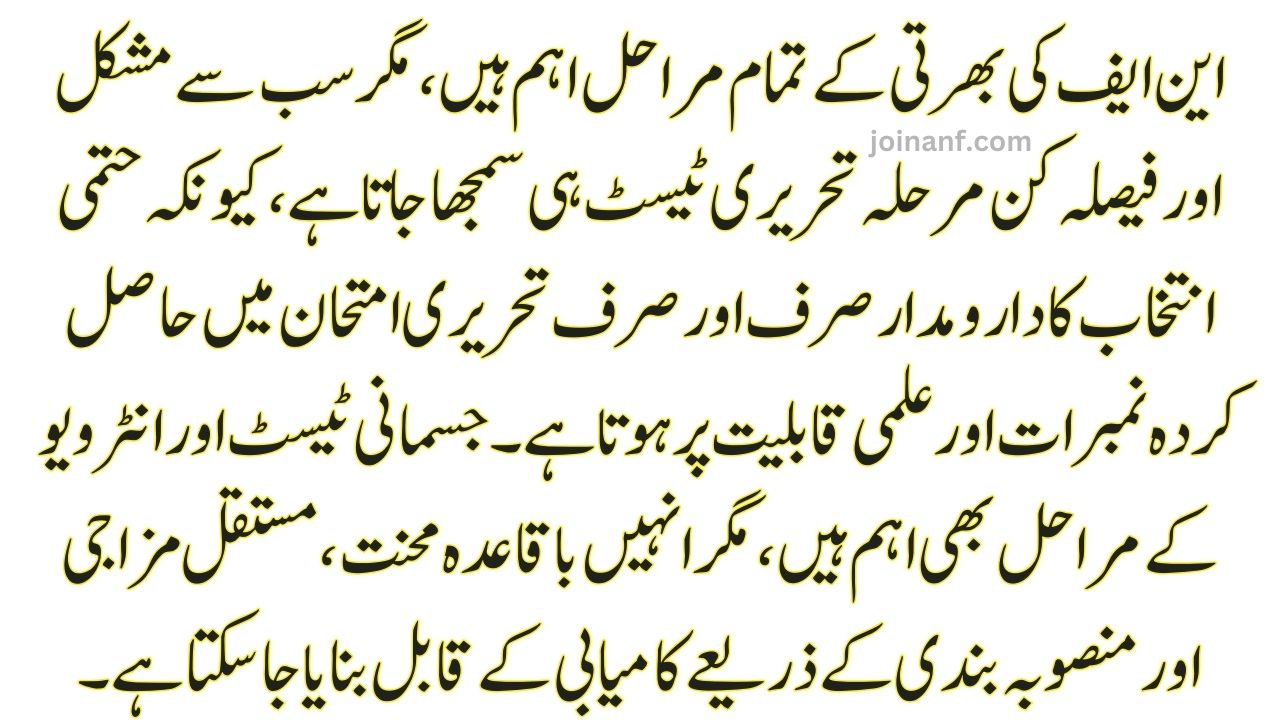
It is important to note that although all stages are important, the written test carries the most weight in final selection. High merit in the written test can make or break your chance, regardless of performance in other stages.
Physical Test: Challenging but Achievable
The physical test evaluates your fitness, endurance, and strength, which are essential for ANF duties.
Common Physical Test Components:
- 1 km or 2 km running
- Push-ups
- Sit-ups
- Pull-ups (for SI candidates)
- Agility drills
Why Candidates Find It Manageable:
- Physical tests are predictable; with regular practice at home, most candidates can prepare successfully.
- Bodyweight exercises, running, and flexibility drills can be practiced without expensive equipment.
Tips for Clearing the Physical Test:
- Start with a fitness assessment to track your current level.
- Follow a structured home workout: push-ups, sit-ups, squats, planks, and running.
- Gradually increase intensity to build stamina and strength.
- Maintain good nutrition and hydration.
- Practice mock physical tests to simulate the real scenario.
Warning: Avoid overtraining, which can lead to injuries and hamper preparation.
Written Test: The Most Difficult Stage
The written test is often considered the toughest part of ANF recruitment, especially for SI and constable positions.
Reasons Why the Written Test is Challenging:
- High Competition – Thousands of candidates compete for limited positions.
- High Merit Requirement – The final selection largely depends on written test marks.
- Varied Subjects – Candidates are tested on general knowledge, reasoning, English, Pakistan studies, current affairs, and sometimes basic professional knowledge.
- Time Pressure – Many questions must be answered within strict time limits.
How to Prepare Effectively:
- Understand the Syllabus:
- Review previous ANF written test papers.
- Focus on subjects with higher weightage.
- Practice Time Management:
- Solve mock papers in timed conditions.
- Prioritize easy questions first, then tackle difficult ones.
- Strengthen Weak Areas:
- Use short notes and daily revision to reinforce knowledge.
- Regular Current Affairs Updates:
- Read newspapers, watch news, and follow official updates.
- Sample Table for Preparation:
| Subject | Suggested Practice Hours/Week | Tips |
|---|---|---|
| English | 5–6 | Vocabulary, grammar, comprehension |
| General Knowledge | 4–5 | Focus on Pakistan & world events |
| Pakistan Studies | 3–4 | Key history, geography, constitution |
| Reasoning & Aptitude | 4–5 | Practice puzzles & previous tests |
Pro Tip: High merit in the written test often guarantees final selection, even if performance in physical or interview stages is moderate.
Interview / Viva Voce: Important but Less Critical
The interview stage assesses personality, confidence, communication skills, and suitability for the role.
What Candidates Experience:
- Questions about personal background, motivation, and understanding of ANF duties.
- Scenario-based questions to evaluate decision-making skills.
- Sometimes ethical or general knowledge questions are included.
Tips to Perform Well:
- Practice clear and confident communication.
- Dress formally and maintain professional etiquette.
- Prepare to discuss your strengths, weaknesses, and motivation.
- Research the ANF mission, vision, and current initiatives.
Note: Unlike the written test, the interview rarely determines final selection alone. A strong written test score often outweighs interview performance.
Which Part is Most Difficult?
Based on candidate experiences and recruitment statistics:
- Written Test – Most difficult due to high merit requirements and competition.
- Physical Test – Achievable with regular preparation; predictable structure.
- Interview – Important for evaluation but less critical compared to the written test.
Summary Table:
| Stage | Difficulty Level | Preparation Focus |
|---|---|---|
| Physical Test | Moderate | Fitness, endurance, strength |
| Written Test | High | Knowledge, reasoning, time management |
| Interview | Low-Moderate | Confidence, communication, awareness |
Warning: Many aspirants underestimate the written test. Even perfect physical performance cannot compensate for low written test marks.
FAQs
Q1: Which part of ANF recruitment is most important?
- The written test is the most important as final selection is heavily based on merit.
Q2: How can I improve my written test scores?
- Focus on syllabus, practice mock tests, review current affairs, and strengthen weak areas.
Q3: Is the physical test difficult to pass?
- No, with structured home workouts, running, and proper nutrition, most candidates can pass the physical test.
Q4: How should I prepare for the interview?
- Practice communication skills, research ANF’s mission, and answer confidently with professionalism.
Q5: Can a candidate fail selection if they pass the physical and interview but score low in the written test?
- Yes, written test scores carry the highest weight in final selection.
Read More: ANF Roll Number Slip 2026 – Step-by-Step Guide to Download
Conclusion
For aspirants wondering which part of ANF recruitment is most difficult, the answer is clear: the written test. While physical fitness and interview skills are important, the final selection is largely determined by merit in the written exam. Focus on building knowledge, practicing past papers, managing time efficiently, and preparing for the physical and interview stages to maximize your chances of success.
Pro Tip: Start preparation early, practice consistently, and prioritize the written test without neglecting physical and interview readiness.
Job
I want to join ANF